

What Is the Best Grinding Ball for 2026?

Choosing the best Grinding Ball for 2026 is not a simple matter of selecting the hardest alloy. The right choice depends on ore abrasiveness, mill speed, ball size, impact conditions, and the plant’s operating goals. Small differences matter. A worn ball can lose mass, alter the charge, and affect grinding performance over time.

Evidence helps narrow the options. Ballantyne and Powell’s 2014 Minerals Engineering benchmarking study examined comminution energy use across copper and gold operations, highlighting how ore and circuit conditions influence performance. CEEC International’s comminution benchmarking resources likewise provide useful context for comparing energy use across different processing setups. These sources do not identify one universally superior ball; they show why operating conditions matter. For a practical comparison, plants should review ball consumption, throughput, product size, and mill power together. Supplier wear tests can help, but site trials remain essential. Results from another mine may not transfer neatly to yours. That limitation matters. In this guide, we compare common grinding-ball materials and explain what to measure before choosing a product for 2026. The aim is a defensible shortlist, not a perfect answer: test results can vary, and even a well-supported choice deserves review after installation.
What Is the Best Grinding Ball for 2026?

What Grinding Balls Are and How They Work

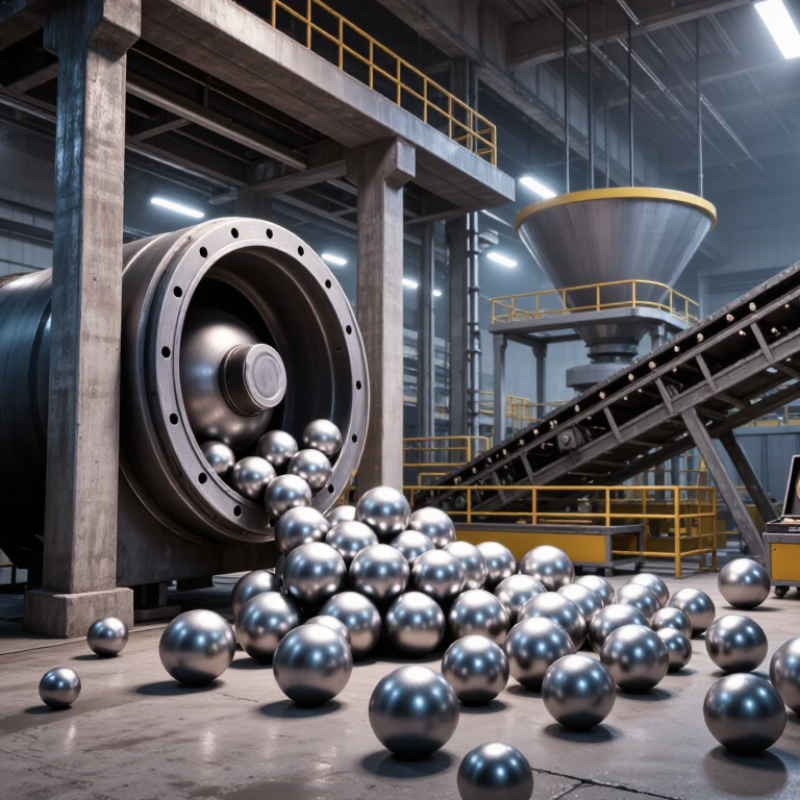
Grinding balls are spherical media placed inside a rotating mill. As the mill turns, they rise with the lining and then fall or roll through the ore. Their movement breaks material through impact and abrasion. The sound is distinctive: a steady rumble, with sharper knocks when larger balls drop. That motion matters.

Ball size affects how energy reaches the material. Larger balls can deliver stronger impacts to coarse, tough feed, while smaller balls provide more contact points for finer grinding. These are tendencies, not fixed rules. The ore, mill design, and operating conditions all change the result. There is no perfect choice.

Material matters, too. Forged or cast steel balls are common in many mineral-processing mills; ceramic media may suit some applications where lower contamination is important. A useful selection balances hardness, toughness, wear rate, and cost. Very hard balls can resist wear, but poor toughness may raise breakage risk. Very soft balls may wear quickly and alter the mill’s grinding performance.

Operators can assess performance by tracking ball consumption, product size, mill power, and signs of breakage. A worn ball may look smooth and smaller, but appearance alone does not reveal the full story. Testing with the actual ore is more reliable than relying on a catalogue value. Even then, results can shift as feed conditions change.

Which Grinding Ball Materials Are Available in 2026

What Is the Best Grinding Ball for 2026?
Which Grinding Ball Materials Are Available in 2026

Grinding balls in 2026 are commonly made from forged steel, cast steel, high-chrome cast iron, and ceramic materials such as alumina. Each behaves differently inside a mill. Forged steel can handle heavy impacts, while high-chrome cast iron often suits abrasive conditions where wear resistance matters. Lower-chrome cast options may cost less, but their service life can vary with ore hardness and operating conditions.

Ceramic balls are lighter and can reduce metallic contamination in some processes. They may be useful when product purity matters, but they are not automatically suitable for every mill or feed size. A ball that performs well in a gentle grinding circuit may chip under repeated heavy impact. Trade-offs remain. I would not treat a catalogue hardness figure as the whole story.

For a practical comparison, record ball consumption, product size, mill load, and any metal contamination during a controlled trial. Look for changes in the discharge: uneven fragments or faster-than-expected wear can signal a mismatch. Test in stages. The best material depends on the ore, mill design, and target product, and a small trial may reveal details that a specification sheet misses.

What Is the Best Grinding Ball for 2026? Which Grinding Ball Materials Are Available?

Grinding Ball Material Typical Density Main Advantages Common Applications Key Limitations Best Fit When...
Forged steel About 7.8 g/cm³ High impact resistance; widely used in large tumbling mills; suitable for coarse and high-impact grinding. Mining and mineral processing, including ball mills and other tumbling mills. Can introduce iron into the product; wear and performance depend on heat treatment, operating conditions, and feed material. High impact, throughput, and robust operation are priorities, and iron contamination is acceptable.
High-chromium cast iron Typically about 7.4–7.8 g/cm³ Good abrasion resistance; commonly selected for applications where wear resistance is important. Mineral processing and cement grinding, subject to mill conditions and product requirements. Can be less tolerant of severe impact than appropriately selected forged media; contains iron and chromium. Abrasive wear is a major concern and the operating conditions are suitable for cast media.
Alumina ceramic Typically about 3.6–3.9 g/cm³ High hardness, corrosion resistance, and low risk of iron contamination; available in a range of purities. Ceramic, paint, pigment, chemical, and other applications requiring reduced metallic contamination. Lower density than steel media; may be unsuitable for high-impact duties. Ceramic media can chip or fracture under harsh conditions. Product purity matters and the mill can operate effectively with lower-density media.
Zirconia ceramic Typically about 5.8–6.1 g/cm³ High density and wear resistance; useful for fine grinding with low metallic contamination. Fine grinding and dispersion in chemicals, coatings, ceramics, and advanced materials. Higher material cost than many alternatives; compatibility depends on the slurry, mill, and required product purity. Fine grinding performance and low contamination are important enough to justify the higher media cost.
Silicon nitride ceramic Typically about 3.2–3.3 g/cm³ High hardness and good corrosion resistance; can be considered where contamination control is important. Specialty and high-purity grinding applications, depending on equipment and process requirements. Specialty media with higher cost and more limited availability; not a general-purpose replacement for steel balls. A specialized process requires ceramic media and its material properties suit the mill and feed.

Selection note: There is no single best grinding ball for every process in 2026. The right choice depends on mill type, feed size and abrasiveness, impact severity, required product fineness, contamination limits, media consumption, and total operating cost. Density values are typical ranges and vary by grade and manufacturer.

How to Compare Grinding Ball Performance and Durability

What Is the Best Grinding Ball for 2026?
How to Compare Grinding Ball Performance and Durability

The best grinding ball depends on your mill, ore, and operating conditions. Compare hardness, toughness, density, and resistance to corrosion—not just the purchase price. A ball that wears slowly may reduce replacement needs, but excessive hardness can increase breakage in some applications. Small differences matter. Check the ball’s size and surface condition, too; uneven wear can affect grinding consistency.

Use a controlled trial with the same feed, mill settings, and operating time. Track wear rate, breakage, product size, and energy use. Cost per ton of material processed is often more useful than cost per ball. Keep records across several operating cycles, since ore properties and water chemistry can change results. A clean spreadsheet helps, but it may miss unexpected downtime or handling losses. Real plant data can be imperfect.

Tips: Inspect worn balls for cracks and flattened areas. Compare test results under your own conditions, and ask suppliers for clear material specifications. Avoid choosing by a single metric. A short trial can reveal a lot.

What Is the Best Grinding Ball for 2026?

Comparing typical commercial hardness ranges by grinding-ball material

Higher hardness can improve wear resistance, but it does not determine service life on its own. Impact toughness, ball size, heat treatment, ore characteristics, and mill conditions also matter. The ranges shown are indicative; actual specifications vary by product and manufacturer.

How to Choose a Grinding Ball for Each Milling Application

What Is the Best Grinding Ball for 2026?

Choosing a grinding ball starts with the material, mill, and product target—not a calendar year. For a hard, abrasive ore, wear resistance matters because frequent media replacement can disrupt production. Softer feed may need less aggressive media to limit unnecessary wear.

There is no universal best.

Match ball size and density to the mill’s impact and grinding conditions. Larger, heavier balls can help break coarse feed, while smaller balls offer more contact points for finer grinding. But the wrong size can waste energy or leave unevenly ground material. Check the mill’s operating data before changing the media.

Material compatibility matters, too. In food, ceramic, or other contamination-sensitive processing, confirm that the media will not introduce unwanted elements. Run a controlled trial using representative feed, and record throughput, product size, wear, and power use. Keep the operating conditions consistent. Small details matter. A short trial may not reflect seasonal changes in feed, and I would treat its results with caution. Review maintenance records and inspect worn balls for uneven wear or surface damage before settling on a specification.

What Factors Determine the Best Grinding Ball in 2026

What Is the Best Grinding Ball for 2026?
What Factors Determine the Best Grinding Ball in 2026

The best grinding ball depends on the ore, mill, and operating conditions—not a single material or size. Hard, abrasive ore can wear balls quickly, while softer feed may not justify a high-cost option. Ball diameter matters too: larger balls deliver stronger impacts, but smaller balls can improve contact with fine particles. The right balance depends on feed size and the product target.

Material and hardness affect wear life, impact resistance, and the risk of contaminating the product. Steel balls suit many applications, while ceramic options may help when metal contamination is a concern. Mill speed, liner design, slurry density, and operating hours also shape performance. Compare measured wear, energy use, throughput, and product quality across real operating periods. A ball that lasts longer is not automatically better if grinding efficiency drops. There is no universal winner. Even careful testing can miss changes in ore feed.

Tips: Start with the mill’s current ball size and wear records. Change one variable at a time, then track the results. Ask whether gains hold across different ore blends. Small trials can mislead; keep that in mind.