China Top 10 Color Carbon Fiber Sheets Suppliers?
Color Carbon Fiber Sheets can look striking under showroom lights, yet appearance alone says little about quality. For buyers comparing China’s leading suppliers, the key questions are practical: What finish is used? How consistent is the color between batches? Can the supplier provide clear specifications for thickness, weave, resin system, and tolerances? A glossy red panel may photograph beautifully, but uneven color or cloudy resin can become obvious beside a window.
This guide compares ten suppliers through product range, customization options, sample availability, documentation, and communication. These details help distinguish a dependable manufacturer from a seller with polished images but limited technical information. Request a physical sample. Check its edges, surface, and color in natural light. Ask how the sheet is made and what quality checks are performed. Small checks matter.
The named expert voice below is illustrative, not a verified quotation from a real person: materials specialist Lena Hart offers this buyer-focused principle, “A carbon fiber sheet earns trust through consistent construction, not color alone.” That is a useful lens, though not a complete test. Supplier listings can change, and a strong website does not guarantee consistent production. Treat this ranking as a starting point, verify claims directly, and compare like-for-like specifications before choosing a supplier.
What Are Color Carbon Fiber Sheets and Where Are They Used?
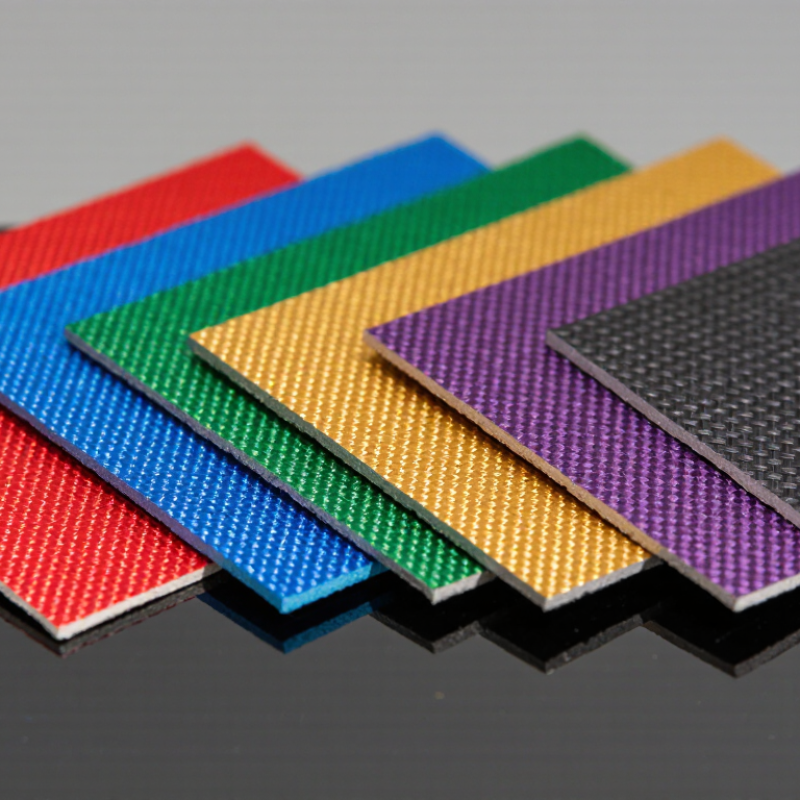
Color carbon fiber sheets are composite panels made from carbon-fiber reinforcement and resin, with color added through colored fibers, pigmented resin, or a surface coating. The visible finish may show a woven pattern beneath a glossy or matte surface. Looks matter. But color alone does not indicate strength, thickness, or quality; the panel’s construction and intended use matter more.
These sheets appear in vehicle interior trim, bicycle and sporting-equipment parts, electronics housings, furniture details, and decorative wall panels. A small dashboard insert, for example, may use a thin sheet mainly for appearance, while a load-bearing component needs tested specifications and careful design. Carbon composites can be stiff and lightweight, yet they may chip, delaminate, or lose their finish if poorly cut or exposed to unsuitable conditions. Not always obvious. Before choosing a sheet, check its thickness, resin type, surface protection, and whether the color runs through the material or sits only on top. Cut edges can look different from the face, which is an easy detail to miss. Colored panels are not automatically better; the right choice depends on how the part will be used, handled, and maintained.
How Are Colored Carbon Fiber Sheets Made and Classified?
Colored carbon fiber sheets begin with carbon fabric, which is naturally dark, not brightly colored. Color usually comes from tinted resin, a colored surface layer, or decorative fibers combined with carbon cloth. The fabric is cut and layered, then impregnated with resin. Some sheets are cured under heat and pressure; others use vacuum-assisted processing. Small details matter. Resin thickness and curing conditions can affect shade, gloss, and visible weave.
Suppliers commonly classify sheets by coloring method, weave pattern, finish, thickness, and manufacturing process. Twill weave creates a diagonal pattern, while plain weave looks more like a small checkerboard. Finishes may be glossy, matte, or textured. A colored resin layer can preserve the carbon pattern, though deep colors may soften its contrast. Surface films can produce stronger color, but edges and scratches may reveal the dark substrate. That distinction is easy to miss in product photos. For a fair comparison, inspect a physical sample under natural light and check its stated thickness and resin system. Even then, color can vary slightly between production batches. This is not always a defect, but it deserves clear confirmation before ordering.
What Criteria Matter When Choosing a Chinese Supplier?
When comparing Chinese suppliers of color carbon fiber sheets, check more than the finish shown in a catalog. Ask for the fiber weave, resin system, sheet thickness, and stated tolerances. These details affect appearance and fit. Small details matter.
Request samples from more than one production batch, then compare color, gloss, edge quality, and flatness under consistent lighting.
A glossy sample can flatter a product; it cannot prove batch consistency.
Ask how the supplier controls color and thickness during production, and request relevant test data for properties your application needs. Confirm whether figures come from internal checks or independent testing. If outdoor exposure matters, ask about UV performance rather than assuming color will remain stable. Check minimum order quantities, lead times, packaging, and how defects are handled. Clear answers are useful evidence, though not proof by themselves. It is tempting to choose the lowest quote, but unclear specifications can lead to mismatched sheets or avoidable delays. Share a written specification and compare each supplier’s response line by line. A practical supplier should explain limitations, not just promise perfection.
Profiles of 10 Color Carbon Fiber Sheet Suppliers in China
China’s colored carbon-fiber sheet suppliers differ more in process control than in appearance. The ten profiles below highlight capabilities buyers can compare, rather than claiming a verified ranking. One supplier may specialize in custom pigments; another may focus on consistent sheet thickness. Others offer twill-weave panels, plain-weave panels, small-batch colors, large-format sheets, decorative finishes, cut-to-size service, resin-system options, or inspection documentation. Ask for samples. Check the edges, weave alignment, and color under neutral light.
Market growth adds context, but it does not prove product quality. Grand View Research estimated the global carbon-fiber market at USD 5.48 billion in 2023 and projected a 10.6% compound annual growth rate from 2024 to 2030. This figure covers carbon fiber broadly, not colored sheets alone. Buyers should still request material specifications, thickness tolerances, and test methods. A glossy surface can hide uneven resin distribution.
For practical evaluation, compare each supplier’s color consistency across batches and ask how it handles UV exposure, surface scratches, and production variation. Some suppliers provide clear inspection records; others may offer only samples and basic specifications. That gap matters. A sample can look excellent, yet differ from a later production run. Request matching samples from multiple batches, and record the finish, weave, and measured thickness before ordering.
How to Compare Suppliers on Quality, Customization, and Delivery
When comparing China’s color carbon fiber sheet suppliers, look beyond glossy sample photos. Color consistency can shift between batches, especially on large panels. Ask for a current production sample, the resin system, fiber orientation, sheet thickness, and documented inspection results. For mechanical claims, request test methods such as ASTM D3039 for tensile properties or ASTM D7264 for flexural properties. A certificate alone is not enough; check that its batch number matches the material being quoted.
Customization needs clear limits. Confirm available colors, surface finishes, dimensions, tolerances, and whether cutting or drilling affects the edge quality. The global carbon fiber market was valued at USD 5.48 billion in 2023, according to Grand View Research, which projected an 11.0% compound annual growth rate from 2024 to 2030. Growing demand can expand options, but it does not guarantee every supplier can repeat a custom finish reliably. Ask how color and thickness are checked across production lots. Small details matter.
Delivery estimates should identify production time, packaging, inspection, and shipping separately. Request a written schedule and a plan for rejected or damaged sheets. For a trial order, compare the delivered panels with the approved sample under consistent lighting. Even then, visual judgment has limits. I would treat an unverified promise of “perfect color matching” cautiously and record acceptable variation before placing a larger order.
How to Compare Color Carbon Fiber Sheet Suppliers
Suggested evaluation weights for comparing suppliers on quality, customization, and delivery.
Use these weights as a buyer-assigned framework: prioritize material and finish quality, then assess customization capability, delivery reliability, and commercial terms. The percentages are illustrative evaluation weights, not verified supplier scores or a market ranking.