Why Choose High Purity Boron Nitride for Your Applications?
High Purity Boron Nitride (HPBN) is gaining traction across various industries due to its exceptional properties. Engineers and scientists appreciate its thermal stability, electrical insulation, and strength. According to a recent report by MarketsandMarkets, the global boron nitride market is expected to reach $2.8 billion by 2025, driven by increasing demand in electronics and aerospace.
Dr. Emily Zhang, a leading expert in advanced materials, states, "The versatility of High Purity Boron Nitride makes it a game-changer in many applications." Its use in semiconductor manufacturing and thermal management illustrates its valuable role in supporting innovation. HPBN offers solutions in surface coatings, enhancing the lifespan of components.
However, the rise of HPBN comes with challenges. Manufacturing techniques must improve to meet quality standards consistently. Ensuring purity levels can determine performance in critical applications. The industry must navigate these complexities while promoting the benefits of High Purity Boron Nitride to end-users. Balancing innovation with reliability will be key to its future.
Understanding High Purity Boron Nitride: Composition and Properties
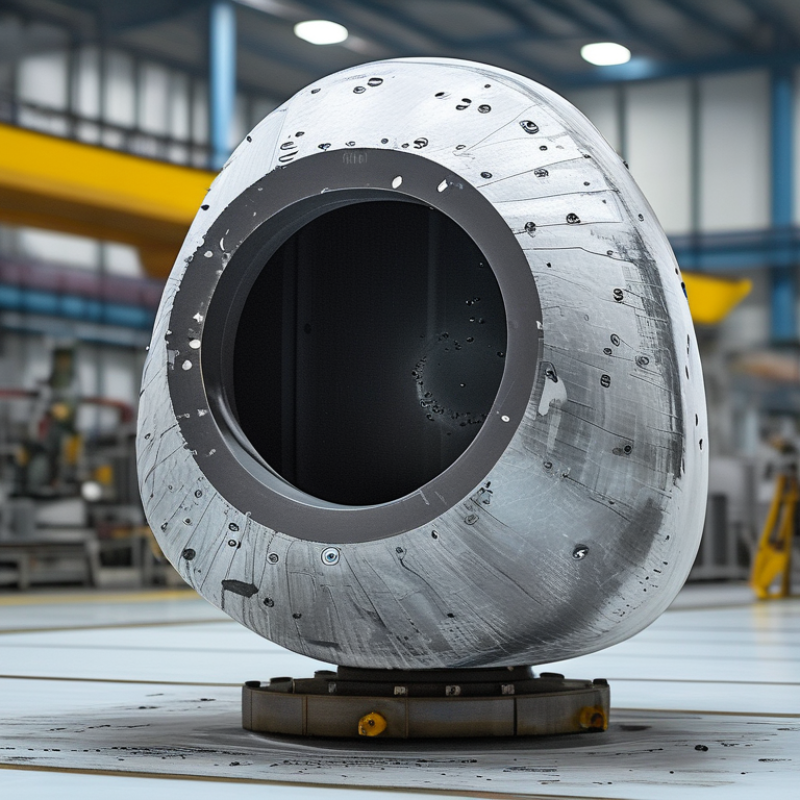
High purity boron nitride is gaining attention due to its unique composition and properties. Its structure resembles that of graphite, consisting of a hexagonal lattice. However, boron nitride is not conductive. This lack of electrical conductivity makes it ideal for applications in electronics and insulation. The high purity level ensures minimal impurities, enhancing performance in fragile environments.
One significant property of boron nitride is its excellent thermal stability. It can withstand high temperatures without breaking down. This attribute benefits industries requiring materials that perform under extreme conditions. Moreover, its chemical resistance helps it thrive in aggressive environments. Although it’s a reliable choice, sourcing the right grade can be challenging. Different applications may have unique requirements that must be met.
Exploring the practical uses of high purity boron nitride is essential. It finds uses in lubricants, coatings, and thermal management systems. However, selecting the appropriate formulation may require careful consideration. Misjudging specifications could lead to performance issues. Thus, practitioners need to be meticulous when choosing products for their specific needs.
High Purity Boron Nitride Properties Overview
Key Applications of High Purity Boron Nitride in Various Industries
High purity boron nitride (BN) has carved a niche in various industries due to its remarkable properties. Its ability to withstand extreme temperatures makes it essential in the semiconductor industry. Manufacturers rely on BN for insulation in high-performance electronic devices. This help enhances the longevity and efficiency of the components.
In the aerospace sector, high purity BN serves as a crucial material in thermal management systems. It effectively dissipates heat, which is vital for protecting sensitive components during flight. Additionally, BN's low coefficient of friction makes it valuable in lubrication applications. It reduces wear and tear on moving parts, contributing to more efficient operations.
However, despite its advantages, the manufacturing process of high purity BN can be complex. Achieving the desired purity levels requires careful monitoring. Some companies face challenges in sourcing raw materials that meet strict quality criteria. It's crucial to address these hurdles to fully utilize the benefits of high purity boron nitride in diverse applications.
Benefits of Using High Purity Boron Nitride Over Other Materials
High purity boron nitride (h-BN) stands out in various applications due to its unique properties. It offers exceptional thermal stability and electrical insulation. Unlike traditional materials, h-BN is chemically inert. This makes it ideal for environments that require high resistance to corrosion and oxidation.
One major benefit of using h-BN is its high thermal conductivity. This property helps manage heat efficiently in electronic devices. It can be used in substrates and coatings, enhancing performance. Furthermore, h-BN provides excellent lubrication in high-temperature applications. Its low friction properties reduce wear and tear, extending equipment life.
Tips: When choosing h-BN, consider your specific application needs. Assess the environment and the thermal requirements of your project. Researching suppliers can ensure quality and purity levels meet your expectations. Always seek materials that align with your performance criteria. Using h-BN can lead to improvements, but it also requires careful handling and application expertise for optimal results.
Factors to Consider When Choosing High Purity Boron Nitride
When selecting high purity boron nitride for applications, several critical factors come into play. The purity level is paramount. High purity boron nitride contains over 99.5% BN, minimizing impurities that could affect performance. According to the Global Boron Nitride Market report, this purity ensures superior thermal conductivity and electrical insulation. Such characteristics are essential in high-temperature applications and electronic components.
Thermal stability is another crucial consideration. High purity boron nitride exhibits excellent thermal stability, even at elevated temperatures. This property ensures reliability in demanding environments, like aerospace or defense applications. Testing shows that it maintains its properties at temperatures exceeding 2000°C. This makes it a prime candidate for substrates and furnace components.
**Tips:** Ensure the boron nitride source is well-documented. Trustworthy suppliers provide material safety data sheets and certification. Verify their testing methods to confirm the claimed purity levels. Remember, transparency is vital.
Another factor is the particle size. A smaller particle size can mean better packing and performance in certain applications. However, smaller particles may also lead to increased difficulty in processing. Evaluate the trade-off between particle size and usability in your specific application.
Future Trends and Innovations in High Purity Boron Nitride Applications
High purity boron nitride (h-BN) is gaining traction in various industries. Its unique properties make it suitable for innovative applications. In the realm of electronics, h-BN serves as an effective thermal management material. It helps dissipate heat in devices, enhancing performance and longevity. As electronic devices become smaller, the need for efficient heat management intensifies.
Emerging research emphasizes h-BN in aerospace and automotive sectors. Its lightweight nature and thermal resistance contribute to more efficient fuel consumption. Engineers are exploring its use in next-generation composite materials. The potential for creating durable and lightweight structures is immense. However, challenges include ensuring consistent quality and availability of h-BN.
Researchers are now focused on enhancing the production methods of h-BN. Innovations aim to lower costs and improve scalability. Future applications may transform industries, including renewable energy and medicine. The ongoing pursuit of higher purity and better properties highlights the importance of this material. Yet, the road ahead requires careful consideration of environmental impacts and sustainability.