How to Choose the Right Die Casting Molds for Your Projects?
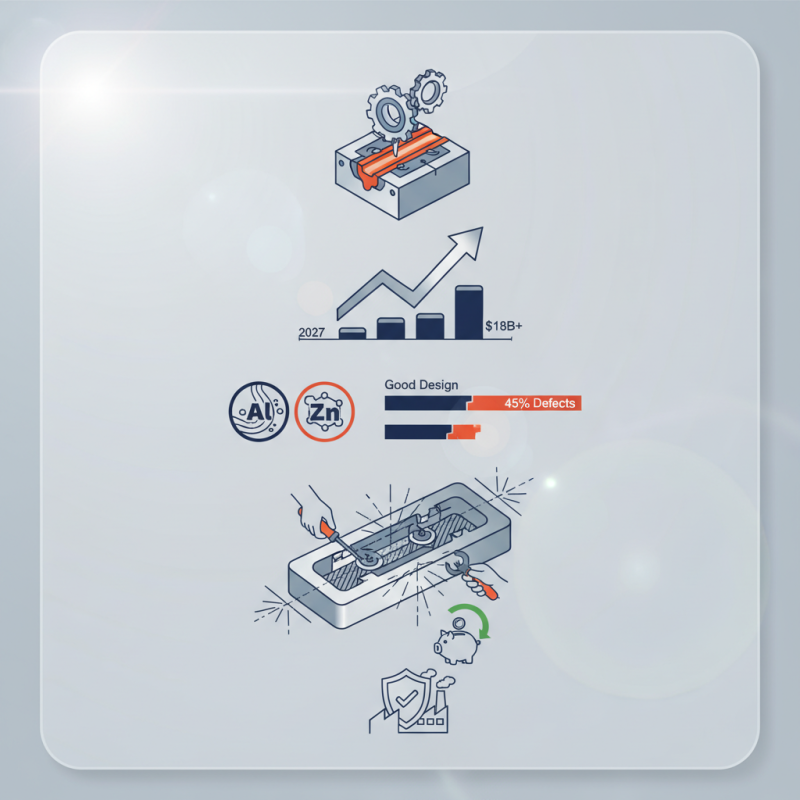
Choosing the right Die Casting Molds is critical for successful projects. The die casting industry is projected to reach $18 billion by 2027. This growth highlights the increasing demand for high-quality molds. Selecting the perfect mold can influence production efficiency and product quality.
When assessing molds, consider materials like aluminum or zinc. Each material has distinct properties that cater to different project needs. Reports indicate that about 45% of die casting defects arise from poor mold design. This statistic emphasizes the importance of thoughtful selection and planning.
The design phase demands careful attention. A mold that doesn't fit the project can lead to wasted resources. Focus on durability and precision when choosing die casting molds. Many manufacturers still face challenges regarding mold maintenance. Regular assessment can prevent costly replacements and downtime. Making informed choices can ultimately lead to significant savings and enhanced product reliability.
Understanding the Basics of Die Casting Molds
When starting with die casting molds, understanding their structure is crucial. A die cast mold consists of two halves that come together to form a cavity. This cavity shapes the molten metal into a specific design. The quality of the mold will significantly affect the final product's precision and surface finish. Choosing the right material for your molds, often steel or aluminum, impacts durability and cost.
Another important factor is the cooling system. Proper cooling reduces cycle times and enhances production efficiency. Sometimes, the design may need adjustments after initial testing. It's common to encounter issues like insufficient heat transfer or uneven cooling. These require careful analysis to avoid wastage.
The mold's surface finish also plays a key role in the final output. A rough finish can lead to more defects. However, achieving a perfectly smooth finish adds to costs and time. Balancing these aspects can be challenging. Continuous improvement and regular evaluations help in refining the mold design. Testing prototypes can uncover hidden flaws early, making adjustments easier. Embracing imperfections in initial designs can lead to better products in future endeavors.
Types of Die Casting Molds Available for Different Projects
When selecting die casting molds, it's crucial to understand the types available for specific projects. There are mainly two categories: sand casting molds and permanent molds. Sand casting molds are made from a mixture of sand and binder. They are cost-effective but can have limitations in terms of surface finish. Permanent molds, on the other hand, allow for higher precision and better surface quality. These are typically made of metal. Each type serves distinct needs, depending on the design and function of the final product.
For instance, if you are creating a one-off prototype, sand molds might suffice. They are easier and quicker to produce. However, for mass production, you might want a permanent mold. This choice could lead to higher initial costs but save money over time. Sometimes, manufacturers overlook this aspect, resulting in wasted resources. It's essential to properly evaluate your project’s requirements. Consider production volume, material properties, and costs. A careful selection process could make a significant difference in the project's success.
Key Factors to Consider When Choosing Die Casting Molds
Choosing the right die casting molds is crucial for project success. Several key factors influence this decision. First, consider the material. Zinc, aluminum, and magnesium each have unique properties. Aluminum molds, for instance, are popular due to their thermal conductivity. They can increase production efficiency. According to industry reports, aluminum molds can reduce cycle times by up to 25%.
Quality of the mold is essential. A well-designed mold ensures precise dimensions and surface finish. This not only affects functionality but also the aesthetics of the final product. Inadequate mold quality can lead to defects. Such issues may require costly rework.
Tip: Always evaluate the cooling systems within the mold. Effective cooling minimizes cycle times and improves part quality. Keep in mind that poor cooling can lead to uneven material flow.
Lastly, consider the production volume. High-volume projects benefit from durable molds. These molds withstand prolonged use. However, for shorter runs, flexibility may be more important. Be aware of your project's specific needs; neglecting this can lead to inefficiency.
Evaluating Material Compatibility for Die Casting Projects
Choosing the right die casting molds requires careful consideration of material compatibility. The material used in die casting affects product strength, durability, and overall performance. According to a 2021 industry report, over 70% of casting defects stem from material incompatibility. This statistic highlights the importance of evaluating both the mold material and the metal alloy.
For most projects, aluminum and zinc are the most common materials. Aluminum alloys provide excellent strength-to-weight ratios. They also exhibit good corrosion resistance. Meanwhile, zinc alloys are known for their intricate details and smooth finishes. However, it is essential to assess how these materials interact with each other during the casting process. Sometimes, unexpected reactions can lead to defects. A miscalculation can compromise the integrity of the finished product.
Moreover, design considerations play a crucial role. Complex geometries may require specialized mold materials that can withstand higher temperatures. A study revealed that molds made from premium steel had a 30% longer lifespan than standard options. This increase can significantly impact the overall project cost. Notably, understanding the melting point of the chosen alloy is vital. The mold material must endure without deformation or damage. Balancing all these factors is a complex task, but essential for achieving high-quality results.
How to Choose the Right Die Casting Molds for Your Projects? - Evaluating Material Compatibility for Die Casting Projects
| Material Type | Melting Point (°C) | Material Compatibility | Uses/Applications | Cost (per kg) |
| Aluminum Alloy | 660 | Excellent | Automotive parts, Electronics | $2.50 |
| Zinc Alloy | 385 | Good | Hardware, High-precision parts | $3.00 |
| Magnesium Alloy | 650 | Good | Aerospace, Automotive | $4.00 |
| Copper Alloy | 1085 | Fair | Electrical connectors, Marine applications | $6.50 |
| Tin Alloy | 232 | Excellent | Soldering, Cooking ware | $7.00 |
Best Practices for Maintaining and Using Die Casting Molds
Maintaining and using die casting molds effectively is crucial for achieving high-quality outputs. Regular inspections can reveal issues early. Look for wear and tear on critical areas. Check the alignment and make adjustments as needed. Even minor misalignments can lead to defective parts. Keep molds clean to avoid contamination. A simple cleaning routine can extend their life.
Proper lubrication is essential for smooth operation. Use the right kind of lubricant in appropriate amounts. Over-lubrication can attract dirt, while under-lubrication leads to increased wear. Monitor the mold temperature during casting. Excessive heat can distort molds, causing further issues down the line. Developing a routine helps to identify patterns. Are molds wearing out faster than expected?
Adhering to best practices is important, yet it is just as vital to adapt and improve. Regularly reviewing your processes can unveil hidden inefficiencies. Take time to reflect on past mistakes. Mistakes provide valuable lessons for future projects. Engage your team in discussions about mold usage. Sharing experiences can yield new insights and better practices.
Die Casting Molds Usage Analysis