How to Choose the Best IR Lens for Your Needs?
Selecting the right Ir Lens is crucial for maximizing your thermal imaging needs. The market for infrared optics is expanding, with projections indicating growth exceeding 10% annually through 2025, according to industry reports. As advancements in materials and technology evolve, choosing the appropriate IR lens can enhance both image clarity and detection capabilities in various applications.
When considering an IR lens, factors like focal length, size, and material are essential. Many users overlook these details, leading to suboptimal performance in critical situations. The wrong choice can affect thermal sensitivity and analysis accuracy. For instance, Germanium lenses commonly provide superior performance but come at a higher cost.
Feedback from professionals indicates that users often underestimate the significance of proper calibration and lens matching. If the IR lens does not align with the camera specifications, image quality can degrade. This highlights the importance of sticking to proven brands and consulting experts in the field to avoid common pitfalls. Understanding both technical specifications and personalized needs ensures you invest wisely in an IR lens that meets your unique requirements.
Understanding the Different Types of IR Lenses and Their Applications
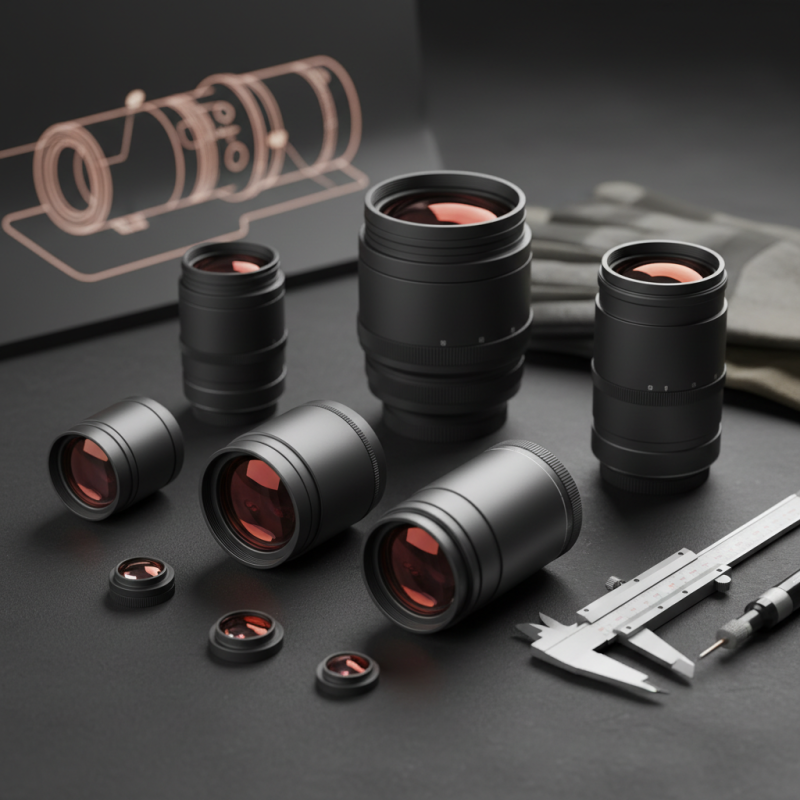
When choosing an infrared (IR) lens, understanding the different types can help meet specific needs. There are several categories of IR lenses available, including fixed, zoom, and custom-designed lenses. Fixed lenses are simple and cost-effective but may limit versatility. Zoom lenses offer flexibility but can be more expensive and complex. According to a recent industry report, around 70% of IR applications in security and surveillance utilize fixed lenses due to their reliability and performance.
It’s essential to consider the material and wavelength range when selecting an IR lens. Germanium and silicon are common materials that provide excellent transmission for different IR wavelengths. Studies indicate that lenses made from Germanium perform best in the 8-12 µm range, making them ideal for thermal imaging applications. Conversely, silicon lenses perform better in the near-infrared spectrum, suitable for many sensing applications. However, the choice in material may increase costs and impact durability.
Assessing the application of the IR lens is crucial. Many users overlook the impact of lens choice on overall system performance. For example, using an incompatible lens could distort images or reduce clarity. Real-world performance tests show that selecting the right lens can enhance image quality by up to 30%. Therefore, conducting in-depth research and possibly consulting with experts can aid in making more informed decisions.
Key Specifications to Evaluate When Selecting an IR Lens
When selecting an infrared (IR) lens, there are key specifications to evaluate. Consider the wavelength range, as it affects sensitivity and image quality. Different applications may require lenses optimized for specific wavelengths. Analyzing the material composition is crucial too; materials like germanium or silicon have unique transmission properties.
Resolution is another critical factor. Higher resolution improves image clarity but can increase costs. Evaluate pixel density and spatial resolution based on your project's needs. Don't overlook the lens size and weight, as these can impact portability and integration with other devices.
Additionally, think about the field of view. A wider field can capture more content, but it might sacrifice detail. Reflect on the use case and desired outcome. Lastly, examine the lens's compatibility with your equipment. Mismatched specifications can lead to inefficiencies. Relate these criteria to real-world scenarios for a better understanding of their implications.
How to Choose the Best IR Lens for Your Needs?
Assessing the Impact of Wavelength Range on IR Lens Performance
When choosing an infrared (IR) lens, examining the wavelength range is crucial. Different lenses operate best within specific wavelength ranges. This affects their overall performance and suitability for your particular application. For example, some lenses excel in shortwave infrared (SWIR) regions, while others are optimized for long-wave applications. Understanding these distinctions can dramatically impact the effectiveness of your IR imaging.
Tips for choosing the right IR lens:
- Assess how the lens performs across its specified wavelength range.
- Look for data on transmittance and clarity at your desired wavelengths.
- Consider the environmental factors where the lens will be used. For instance, the presence of humidity or dust can affect the lens's ability to transmit infrared light.
Testing various lenses can be beneficial. Observing how they perform in real-world conditions allows for a comparison of their strengths and weaknesses. Don’t just consider technical specifications; practical performance under typical conditions is essential. Collect feedback from users or experts who have experience with various lenses to inform your decision-making.
Comparing Materials Used in IR Lens Manufacturing for Durability
When selecting an infrared (IR) lens, the material used in its construction plays a crucial role. Common materials include germanium, silicon, and chalcogenide glass. Each comes with unique characteristics that impact durability and performance. For instance, germanium offers excellent transmission in the IR range, but it can be brittle. Proper handling is vital when using this material. It's worth considering how the material's properties align with your operational needs.
Silicon, on the other hand, is more robust and less prone to shattering. It's often used in environments that might see rough treatment. However, its transmission capabilities are not as superior as germanium. This trade-off needs careful consideration. Chalcogenide glass combines good durability with decent transmission, but it may require specific care to ensure longevity.
Understanding these materials helps in making an informed decision. Think about where and how the lens will be used. The right choice can enhance both reliability and performance. The wrong choice may lead to regrets and added costs over time. Reflect on the conditions your lens will face every day. This reflection can guide you toward a lens that truly meets your needs.
How to Choose the Best IR Lens for Your Needs? - Comparing Materials Used in IR Lens Manufacturing for Durability
| Material | Durability Rating | Thermal Stability | Cost (per unit) | Common Applications |
| Germanium | High | Very stable from -40°C to 70°C | $150 | Thermal imaging, Industrial applications |
| Silicon | Medium | Stable from -20°C to 80°C | $80 | Low-cost thermal sensors |
| Zinc Selenide | Medium | -20°C to 120°C | $100 | Laser optics, Thermal imaging |
| Sapphire | Very High | Excellent, up to 200°C | $300 | Military applications, Harsh environments |
Determining the Cost-Effectiveness of IR Lenses for Specific Use Cases
When selecting an infrared (IR) lens, cost-effectiveness is a vital consideration. Different use cases demand different specifications. Understanding your specific needs can save you money in the long run. For example, a lens suited for surveillance may not be the best choice for industrial applications. Evaluate how often you will use the lens and in what conditions.
Tips for saving costs: Always look for multi-functional lenses. They can adapt to different situations without needing replacements. Also, consider rental options if your needs are temporary. This approach can often be more economical than purchasing.
Buying low-cost lenses may seem appealing. However, they can lead to poor performance. In contrast, investing in a quality lens may enhance your results and longevity. Analyze your project requirements thoroughly before making a decision. Long-term benefits often outweigh initial costs. Reflect on the potential outcomes of each lens choice. Missteps here can affect your project significantly.