What is a Stainless Hex Nut and How is it Used?
Stainless Hex Nuts are essential fasteners in various applications. These hexagonal nuts are made from stainless steel, ensuring durability and resistance to corrosion. Their design allows them to fit snugly onto bolts, providing strong connections in mechanical assemblies.
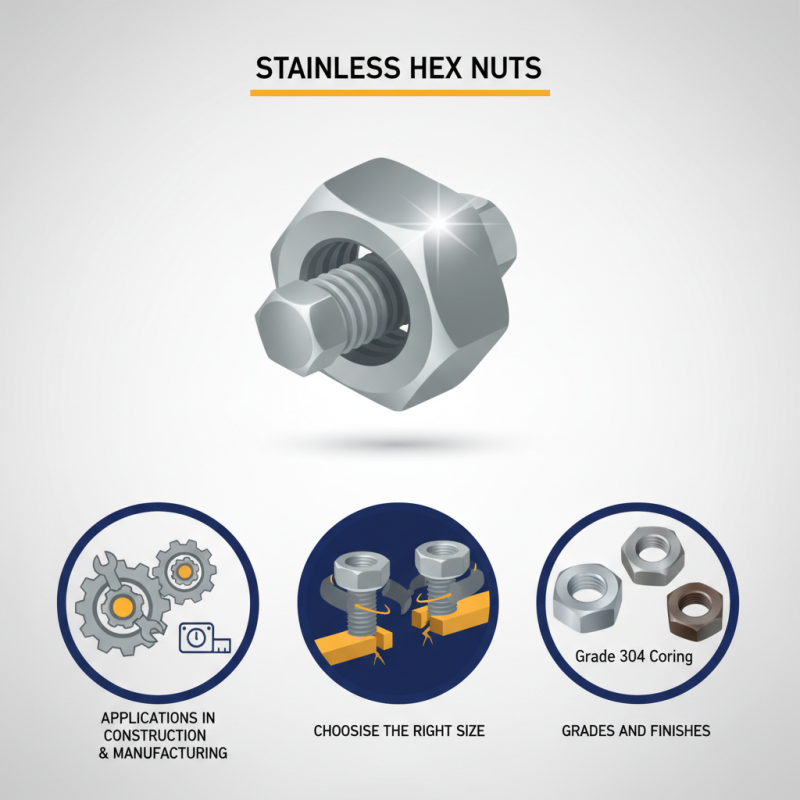
In construction and manufacturing, Stainless Hex Nuts play a vital role. They hold parts together, securing structures from disassembling. However, improper use can lead to failures. Choosing the right size is crucial. A loose nut may not hold, while an overtightened one can cause damage.
Understanding how to use Stainless Hex Nuts effectively is key. This includes recognizing their different grades and finishes. Selecting the best option for your project can be challenging, but it's important. Reflecting on these factors will lead to better outcomes in your work.
Definition of Stainless Hex Nut and Its Characteristics
A stainless hex nut is a type of fastener with six flat sides. It's usually made from stainless steel, offering strong resistance to rust and corrosion. These nuts come in various sizes, which allows for flexibility in a range of applications. They can be easily tightened and adjusted, making them user-friendly. The simplicity of their design makes them a staple in construction and machinery.
In addition, the characteristics of stainless hex nuts include their durability and strength. They provide a strong hold when paired with a bolt. This is essential for structural integrity in many projects. A disadvantage may arise if they are not installed correctly; overtightening can lead to stripping. It's crucial to ensure proper torque settings during installation. Visual inspection is also important, as even small defects can affect performance.
Usage of Stainless Hex Nuts in Different Industries
Different Types of Stainless Hex Nuts Available in the Market
Stainless hex nuts are versatile fasteners used in various applications. They are known for their durability and resistance to corrosion. These nuts come in several types, each designed for specific tasks. One common type is the standard stainless steel hex nut. This is widely used in construction and machinery.
Another type is the locking hex nut. It prevents loosening under vibrations, making it ideal for high-stress environments. There's also the flange hex nut, which has a wide base that distributes the load better. It’s perfect for softer materials. Each type has its own advantages and limitations.
Choosing the right nut can be tricky. Not all applications require a locking nut. Sometimes, a standard one suffices. Testing different types can show surprising results. Users often overlook the need for specific features, leading to ineffective outcomes. Understanding the purpose of each type is crucial for better performance. This can save time and resources in the long run.
Common Applications of Stainless Hex Nuts in Various Industries
Stainless hex nuts are essential fasteners in many industries. They are typically used to secure bolts and prevent loosening. In construction, they help piece together complex structures. Their resistance to corrosion makes them ideal for outdoor applications. Many industries rely on durable materials, and stainless steel fits the bill perfectly.
In the automotive sector, stainless hex nuts are common. They secure parts in vehicles where strength is crucial. Vibrations can loosen standard nuts, but stainless steel provides the extra grip needed. In marine environments, these nuts resist saltwater corrosion. That ensures longevity and safety for boats and ships.
Tips: Always ensure proper sizing when selecting hex nuts. An ill-fitting nut can lead to failures. Regular maintenance checks are also wise. Inspect for rust or wear in high-stress areas. Being proactive avoids future disasters. Consider storing unused nuts in a dry place. Keeping them away from moisture extends their useful life.
Installation Techniques for Stainless Hex Nuts
Stainless hex nuts are essential components in various industries. They provide a secure fastening option due to their corrosion resistance. Proper installation techniques are crucial for maximizing their effectiveness and minimizing failures.
One common technique is using a torque wrench for accurate tightening. Studies show that inadequate torque can lead to nut loosening. This can cause equipment failures, leading to costly repairs. A report from the Fastener Quality Act highlights that 30% of fasteners underperform due to improper installation.
Also, cleanliness during installation is often overlooked. Dirt or oil on the threads can prevent effective coupling, reducing strength. An analysis by the Industrial Fasteners Institute found that up to 20% of failures resulted from poor thread conditions. Ensuring the threads are clean can significantly enhance the overall reliability of the hex nut assembly. Practicing these techniques can lead to safer and more efficient use of stainless hex nuts in various applications.
Benefits of Using Stainless Hex Nuts Compared to Other Fasteners
Stainless hex nuts are crucial in various applications, from construction to automotive parts. These fasteners offer significant benefits compared to other materials. Their corrosion resistance is a standout feature. Stainless steel can withstand moisture and chemicals better. This durability leads to a longer lifespan.
Using stainless hex nuts can simplify maintenance. These nuts often require less frequent replacements. This can save time and costs in the long run. In environments where rust is a concern, these nuts shine. They help projects maintain structural integrity, even under harsh conditions.
Tip: Always check specifications before choosing a fastener. Not all stainless steel is the same. Some grades offer better resistance to specific chemicals or temperatures.
Another advantage is the aesthetic quality. Stainless hex nuts can enhance the overall look of a product. This matters in visible applications, such as outdoor furniture. Choose nuts that match the intended design. However, remember that aesthetics should not compromise functionality.
Tip: Keep a set of stainless hex nuts at hand. They are versatile and can work in numerous applications. You can never have too many useful fasteners in your toolbox.