
Top 10 Pneumatic Cylinder Manufacturers for Global Buyers

Choosing a Pneumatic Cylinder supplier is rarely just a price exercise. On a production line, a slow stroke, leaking seal, or hard-to-source fitting can disrupt an entire shift. Small details matter. Buyers need dependable motion, clear specifications, responsive service, and replacement parts that remain available after installation. Priorities vary by application. A packaging plant may need compact mounting and repeatable cycle speed. A washdown environment may place greater weight on corrosion resistance and seal materials. Global purchasing adds further questions: lead times, regional support, documentation, customization, and communication across time zones. Price alone is a poor compass.

This guide introduces ten manufacturers serving buyers in different markets and at different scales. It compares practical considerations such as product range, customization options, technical documentation, service access, and international supply capability. These factors can help narrow a shortlist, but they cannot replace application-specific checks. Confirm bore size, stroke, operating pressure, mounting style, and duty cycle against the equipment design. Ask for current specifications and clarify what support is available in your region. A polished catalog is useful, but it is not proof of fit. The list is a starting point, not a universal verdict. Even a well-known brand may be the wrong choice for one plant’s constraints. Use the profiles to frame better questions, then verify the details with each manufacturer before making a purchasing decision.
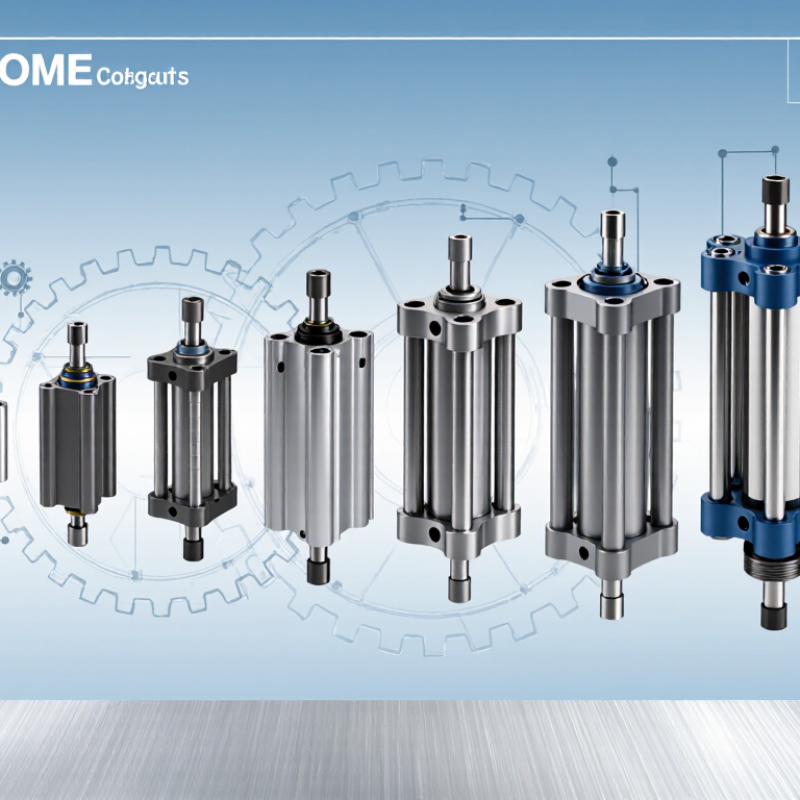
Top 10 Pneumatic Cylinder Manufacturers for Global Buyers

Pneumatic Cylinders: Types, Functions, and Industrial Applications

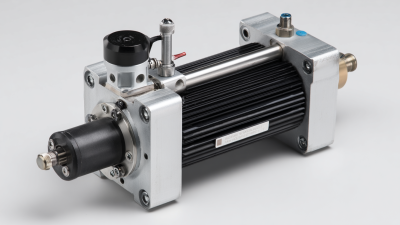
Pneumatic cylinders convert compressed-air energy into controlled linear motion. In a double-acting cylinder, air drives the piston in both directions, supporting repeatable clamping, pushing, and positioning. A single-acting model uses air for one stroke and a spring or external load for its return. Rodless cylinders move a carriage along the cylinder body, saving space where a long rod might obstruct nearby equipment. Small details matter.

On a packaging line, a compact cylinder may guide cartons onto a conveyor, while a larger-bore unit can lift a fixture. These are different duty levels, not interchangeable solutions. Engineers compare bore, stroke, operating pressure, speed, mounting style, and air quality. Adjustable cushioning can soften end-of-stroke impact, though poor settings may still cause noise and wear. A specification sheet is only a starting point.

Industrial applications include assembly, sorting, material handling, and machine automation. In dusty or washdown areas, seal choice, corrosion resistance, and maintenance access deserve attention. Side loads can shorten rod and bearing life, so separate guides may be necessary. Air leaks waste energy, even when movement appears normal. There is no universal best type; actual cycle rates and maintenance records should guide selection. Test one station before expanding the design.
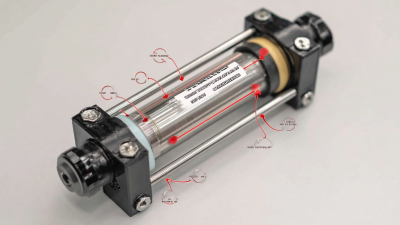
How to Evaluate Pneumatic Cylinder Manufacturers for Global Sourcing

A global sourcing decision should begin with operating conditions, not a catalog price. Record bore, stroke, load, speed, pressure, mounting style, and duty cycle. Ask the manufacturer to confirm seal materials and temperature limits in writing. Small mismatches matter. A cylinder that fits the drawing may still fail early if side loads, moisture, or frequent cycling were overlooked. Request dimensional drawings and tolerance data before approving samples.

Then examine how quality is controlled across production batches. Request inspection criteria, material traceability, and pressure-test records tied to a sample or lot. Clarify whether testing is performed on every unit or by sampling; vague answers deserve follow-up. A clean factory tour helps, but it is not proof by itself. Check the supplier’s change-control process for seals, machining, and subcontracted parts. Consistency is the point.

For cross-border supply, evaluate packaging, lead-time assumptions, spare-part availability, and response times across time zones. Ask for a written delivery plan that identifies the shipping point and who handles export documentation. Pilot a small order and inspect threads, finish, labels, and included fittings on arrival. Keep the findings. One imperfect sample does not tell the whole story, but repeated defects or slow technical replies are useful signals. Price still matters, though comparing quotes without equal specifications can mislead.

ISO 15552 Pneumatic Cylinder Nominal Bore Sizes

A technical reference for screening pneumatic cylinder suppliers by standardized bore-size availability.

The bore diameters shown are nominal sizes in the ISO 15552 series. When evaluating suppliers, confirm the applicable standard and check that bore size, stroke, pressure rating, and mounting options match your application.

Top 10 Pneumatic Cylinder Manufacturers and Their Product Strengths

Pneumatic cylinder manufacturers often distinguish themselves through specific product strengths, not simply broad catalogs. Some focus on compact cylinders for tight machine layouts. Others offer standardized models that simplify replacement across production lines. Heavy-duty designs suit repetitive loads, while corrosion-resistant bodies help in washdown areas. Guided cylinders control side movement. Rodless versions save space on long strokes. Miniature models fit light-duty equipment, and high-speed designs support short cycle times. A few suppliers also provide custom bore sizes, mounting options, or integrated position sensors. Fit matters.

A useful comparison starts with the actual application. Check bore, stroke, operating pressure, load direction, and mounting space against the machine’s requirements. Then review seal materials, expected cycle life, and available technical documentation. These details can reveal whether a low-cost cylinder will withstand daily use. Interchangeable dimensions may reduce downtime, but they do not guarantee identical performance. Small details count. I would also verify service support and replacement-part availability before choosing a supplier; these are easy to overlook.

Tips: Ask for a dimensional drawing and a stated test condition. Compare cycle-life data on the same basis. If the application is unusual, trial one unit before ordering in volume.

Top 10 Pneumatic Cylinder Manufacturers for Global Buyers - Top 10 Pneumatic Cylinder Manufacturers and Their Product Strengths

The profiles below summarize common product-specialist capabilities found across the global pneumatic cylinder market. They are not company-specific claims or a verified ranking; product availability and specifications vary by supplier and model.

Anonymous Supplier Profile Common Product Focus Typical Product Strengths Suitable Applications Buyer Checks
Profile 1 Standard profile cylinders Broad bore and stroke options; mounting styles and dimensions commonly aligned with ISO 15552, supporting interchangeability when the exact specification matches. General factory automation, packaging lines, and material handling. Confirm bore, stroke, cushion type, mounting dimensions, port size, and operating pressure.
Profile 2 Compact cylinders Short overall length relative to stroke; useful where installation space is limited. Some product ranges follow ISO 21287 dimensions. Compact machinery, clamping stations, and short-stroke positioning tasks. Check the applicable standard, mounting arrangement, side-load limits, and available stroke lengths.
Profile 3 Small round-body cylinders Simple cylindrical construction and compact mounting; ISO 6432 covers a range of small-bore pneumatic cylinders. Light-duty automation, assembly equipment, and small-part handling. Verify bore and stroke, end-cap design, mounting accessories, and sensor compatibility.
Profile 4 Rodless cylinders Long travel without an external piston rod extending from the cylinder end, helping reduce the installation length required for a given stroke. Transfer systems, wide-span handling, and applications with limited axial space. Compare load, moment capacity, guidance arrangement, stroke, and contamination protection.
Profile 5 Guided cylinders Integrated guide elements help resist rotation and support loads that should not be carried by the piston rod alone. Pressing, lifting, pick-and-place, and applications with off-centre loads. Review allowable moments, guide clearance, load direction, and required service life.
Profile 6 Twin-rod and multi-position cylinders Multiple rods or piston arrangements can provide improved resistance to rotation or more than one defined stopping position, depending on design. Workpiece positioning, indexing, and multi-step handling equipment. Confirm the number and repeatability of positions, load limits, and control-valve requirements.
Profile 7 Stainless-steel cylinders Corrosion-resistant construction options are available for environments where moisture, washdown, or certain corrosive conditions matter. Food-processing equipment, washdown areas, and exposed industrial installations. Check the stainless-steel grade, seals, surface finish, washdown suitability, and any required hygiene approvals.
Profile 8 High-temperature or special-seal cylinders Selected seal and material combinations can be specified for operating conditions outside those of standard cylinder seals. Equipment exposed to elevated temperatures or application-specific media and environments. Obtain the supplier’s rated temperature range and verify compatibility with the air supply and environment.
Profile 9 Large-bore and heavy-duty cylinders Larger piston areas can generate greater theoretical force at a given pressure; robust mounting and cushioning options may be available. Heavy material handling, industrial machinery, and higher-force actuation. Calculate force at the actual working pressure and account for friction, speed, load, mounting, and cushioning.
Profile 10 Sensor-ready cylinders and accessories Many cylinder ranges support magnetic piston detection with compatible external sensors, enabling end-position feedback. Automated production lines, machine interlocking, and position monitoring. Check piston magnet availability, sensor type, mounting method, switching distance, and control-system compatibility.

Comparing Global Reach, Quality Standards, and Technical Support

Global reach means more than shipping to multiple countries. Buyers should check regional stock, delivery estimates, export packaging, and access to replacement seals. A cylinder arriving quickly is useful. A matching seal kit matters too. Ask whether local technicians can help with bore, stroke, mounting, and port selection. Response time can vary by region, so request a realistic support route before placing a large order.

Quality claims need model-level evidence. Check whether the supplier’s quality system is certified to ISO 9001, and whether the cylinder follows a relevant dimensional standard, such as ISO 15552. These are different checks. Ask for test records, material details, and operating limits for the exact configuration. Technical support should clarify air consumption, side-load limits, cushioning, and sensor compatibility—not just send a catalog. That takes time. A polished brochure may still leave gaps, and buyers can overlook them when comparing prices. There is no flawless shortlist; confirm critical details in writing and test a sample under the intended load and duty cycle.

Matching a Manufacturer to Your Application and Procurement Needs

Selecting a pneumatic cylinder manufacturer starts with the machine, not the catalog. Record bore, stroke, operating pressure, cycle rate, mounting position, and side load. A cylinder pushing a warm, dusty fixture may need different seals and protection than one moving a light package indoors. Fit matters. Check whether the supplier can provide drawings, test data, and compatible replacement parts. A standard size is useful, but it can still be the wrong choice.

Energy use deserves attention during comparison. The U.S. Department of Energy’s Compressed Air Sourcebook reports that compressed-air systems use about 10% of electricity in U.S. manufacturing facilities. It also notes that leaks can waste 20–30% of compressor output. These figures cover whole systems, not individual cylinders, but they make air consumption and seal quality worth discussing. Ask manufacturers for operating-pressure guidance and maintenance intervals, rather than relying on a broad efficiency claim. A neat catalog match can still fail at the machine.

Procurement needs are practical, too. Compare production capacity, realistic lead times, inspection records, technical support across time zones, and access to seals or rods. Request a sample or a pilot installation when downtime would be costly. Confirm tolerances and documentation before approving a substitute. Price matters, but so does the cost of waiting for a small replacement part. One imperfect step is common: buyers often specify the cylinder carefully, then overlook installation access. That detail can change the maintenance plan.