

Top 10 PSA Activated Carbon Suppliers Worldwide

Choosing among the Top 10 PSA Activated Carbon Suppliers Worldwide requires more than comparing product catalogs. Buyers need evidence on pore structure, hardness, ash content, moisture, and consistency between batches. In pressure swing adsorption, small differences matter. A carbon bed must capture target molecules, then release them reliably during regeneration.

The International Energy Agency’s Global Hydrogen Review 2024 reports that worldwide hydrogen demand reached nearly 100 million tonnes in 2023. Much of that hydrogen still came from unabated fossil fuels, but purification remains a practical requirement across production routes. Activated carbon is one adsorbent used in PSA systems, although the right grade depends on the gas mixture and operating conditions. The U.S. Geological Survey’s Mineral Commodity Summaries 2025 also identifies air and gas purification among activated carbon’s established applications.

A useful technical lens comes from adsorption specialist Douglas M. Ruthven and co-authors Shamsuzzaman Farooq and Kent S. Knaebel. Their book, Pressure Swing Adsorption, explains PSA as a cyclic separation process involving adsorption and regeneration. Put simply, the bed must work, then recover. This is a paraphrase, not a verbatim quotation. Supplier comparisons should therefore examine documented specifications, application experience, technical support, and quality-control records—not just price. Rankings can mislead. A supplier suited to hydrogen purification may not fit another gas stream, and published data may not reveal performance at a buyer’s actual pressure, humidity, or cycle time. The following list offers a starting point, not a substitute for testing samples under real operating conditions.
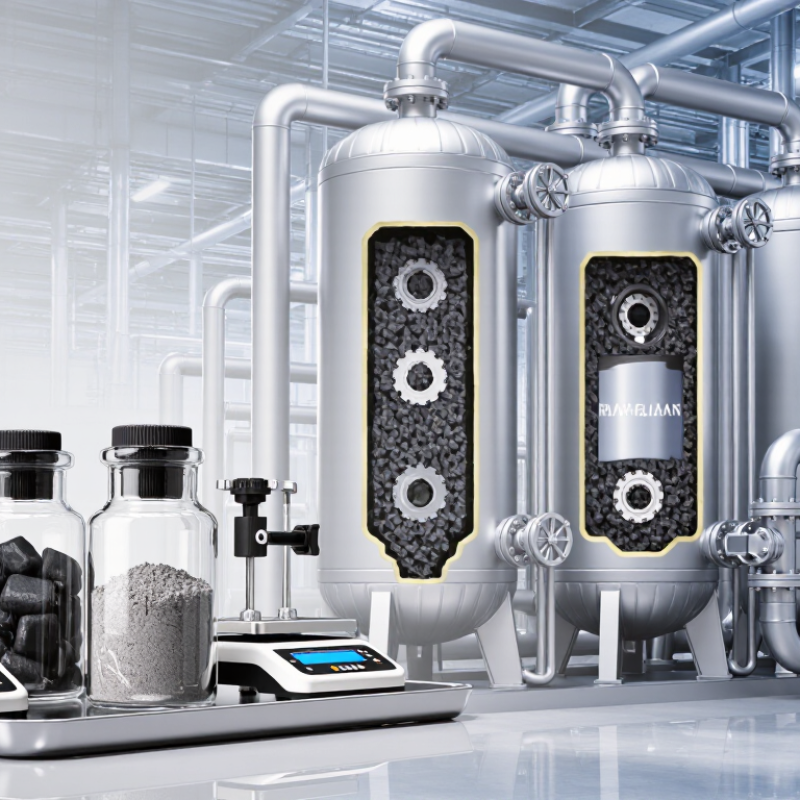
Top 10 PSA Activated Carbon Suppliers Worldwide

PSA Activated Carbon: Its Role in Pressure Swing Adsorption

PSA Activated Carbon: Its Role in Pressure Swing Adsorption

Pressure swing adsorption (PSA) separates gas mixtures by changing pressure across beds of porous adsorbents. At higher pressure, activated carbon can hold selected impurities, such as carbon dioxide and some hydrocarbons. Lowering the pressure releases much of the captured material, helping prepare the bed for another cycle. The result depends on gas composition, moisture, bed design, and operating conditions. One setup will not suit every feed.

In hydrogen purification, carbon often works alongside other adsorbents rather than acting alone. The U.S. Department of Energy’s “Hydrogen Production: Natural Gas Reforming” overview notes that PSA can produce hydrogen with purity up to 99.9%. That figure describes the process, not a guarantee for every installation. Operators still need to monitor pressure, temperature, and breakthrough; a damp or overloaded bed may perform poorly. PSA is useful, but not magic.

Tips: Check the feed gas and dew point before selecting carbon. Track outlet impurity levels over time, not just at startup. If performance drifts, review bed condition and cycle settings before assuming the adsorbent alone is at fault.

How to Evaluate Global PSA Activated Carbon Suppliers

A dependable global PSA activated carbon supplier should prove performance under your actual operating conditions, not just offer an attractive datasheet. The IEA’s Global Hydrogen Review 2024 reports that hydrogen demand reached nearly 100 million tonnes in 2023, while low-emissions hydrogen remained below 1% of production. For hydrogen purification, consistent adsorption performance and dependable delivery both matter.

Request batch-specific certificates and test data for particle size, moisture, ash, hardness, and bulk density. ASTM D4607 iodine number can help compare carbon samples, but it does not predict every PSA cycle. Ask for dynamic working capacity and breakthrough results using gas composition, pressure, and temperature close to your process. Check pressure-drop data and confirm whether the supplier can trace raw materials and manage repeat orders across locations. A datasheet can still leave gaps. Small details matter.

Tips: Ask for a representative sample and test it in a pilot or controlled site trial. Compare the same operating conditions across suppliers. Ask how they investigate off-spec batches and protect shipment quality. Trust measured results, but leave room for a practical trial.

The Worldwide Market for PSA-Grade Activated Carbon

The worldwide market for PSA-grade activated carbon is shaped by gas purity requirements, pressure-swing cycles, and dependable supply. Buyers need more than a high surface-area figure: particle size, hardness, moisture, and adsorption performance can affect pressure drop and operating life. The International Energy Agency’s Global Hydrogen Review 2024 reports global hydrogen demand reached about 97 million tonnes in 2023. This provides useful context for gas-processing demand, but it is not a measure of PSA carbon sales. PSA systems also use other adsorbents, so broad market estimates should not be treated as PSA-grade carbon data.

Specifications matter. A uniform pellet bed can help maintain steady flow, while excess dust may increase maintenance and reduce process efficiency. Suppliers should provide batch-specific certificates and test methods, not only general product claims. Independent checks are valuable. One limitation remains: public reports rarely separate PSA-grade activated carbon from the wider activated-carbon market. That makes supplier comparisons harder than headline figures suggest.

Tips: Request particle-size distribution, crush strength, moisture limits, and application-specific adsorption data. Compare samples under your actual feed-gas conditions. A laboratory result is useful, but it may not predict full-scale performance.

Top 10 PSA Activated Carbon Suppliers Worldwide - The Worldwide Market for PSA-Grade Activated Carbon

Supplier-screening guide: there is no single publicly standardized global ranking of PSA-grade activated carbon suppliers. The ten entries below are technical capabilities and verification points, not company rankings or named suppliers. Product suitability depends on the gas mixture and operating conditions; confirm specifications with the supplier.

No. Supplier capability to assess Relevant product or data Why it matters for PSA What to verify
1 Application-specific product development Adsorbent intended for the specified PSA gas mixture and cycle Adsorption performance depends on gas composition, pressure, temperature, and cycle time. Request test data under conditions representative of the intended process.
2 Clear material identification Activated carbon, carbon molecular sieve (CMS), or another adsorbent These materials are not interchangeable. Nitrogen PSA systems commonly use CMS, while hydrogen PSA systems may use activated carbon alongside other adsorbents. Confirm the precise material type, intended duty, and position in the adsorber bed.
3 Particle-size control Granular or pelletized product with a stated size distribution Particle size affects pressure drop, mass transfer, and bed packing. Check the sieve analysis, allowable fines, and batch-to-batch consistency.
4 Mechanical strength and attrition control Hardness or abrasion-resistance data for the supplied form Breakage and dust formation can increase pressure drop and contribute to bed degradation. Request the test method, results, and limits for fines or attrition.
5 Moisture management Moisture content at dispatch and recommended storage conditions Water can occupy adsorption sites and may affect performance, depending on the process and adsorbent. Check the specified moisture limit, packaging integrity, and handling guidance.
6 Adsorption characterization Application-relevant isotherms, working capacity, or breakthrough data General surface-area or iodine-number values alone do not establish PSA cycle performance. Compare data at relevant pressure, temperature, gas composition, and regeneration conditions.
7 Contaminant and impurity control Ash, extractables, dust, and trace-contaminant specifications Impurities or fines may affect process reliability and downstream gas quality. Request a product specification and a certificate of analysis for each batch.
8 Production consistency and quality assurance Documented quality controls and lot traceability Consistent physical and adsorption properties support predictable bed loading and operation. Review quality documentation, change-control practices, and batch records.
9 Packaging and transport suitability Moisture-resistant, sealed packaging and appropriate bulk options Handling and storage can affect product condition before it reaches the adsorber. Confirm packaging type, shelf-life guidance, shipping terms, and export documentation.
10 Technical support and lifecycle service Loading guidance, troubleshooting, sampling, and replacement planning PSA performance depends on the complete system, including bed design, cycle settings, and feed-gas quality. Ask what commissioning support and product-performance follow-up are available.

Note: Activated carbon grades are not automatically suitable for pressure swing adsorption. Final selection should be based on process-specific testing and confirmed specifications, not a generic carbon rating alone.

Profiles of Ten Leading PSA Activated Carbon Suppliers

Profiles of ten leading PSA activated-carbon suppliers are most useful when they compare measurable capabilities, not broad performance claims. The IEA’s Global Hydrogen Review 2024 reports that hydrogen demand approached 100 million tonnes in 2023. That scale highlights why purification reliability matters, though it does not predict demand for any individual adsorbent. Each profile should identify feedstock, activation route, product form, and the gases the carbon is designed to remove.

Practical differences show up in the details. A plant engineer may compare pellet diameter, bulk density, moisture, ash, crush strength, and pressure drop across a packed bed. Iodine number, measured using ASTM D4607, can help characterize adsorption capacity, but it cannot alone predict performance in a PSA cycle. Ask for application-specific breakthrough data, test conditions, and lot-to-lot variation. Small differences matter.

The ten profiles should also examine technical support, supply continuity, and whether samples are available for pilot testing. Some suppliers may offer granular grades; others focus on pellets or customized pore structures. A strong profile separates published specifications from verified operating results. No supplier is perfect. Report limitations plainly, including missing data or tests performed under conditions unlike the buyer’s process. That modest caution can prevent an expensive mismatch.

Top 10 PSA Activated Carbon Suppliers Worldwide — Understanding the Feed Gas

Dry-air composition by volume, a useful reference for PSA nitrogen-generation systems using carbon molecular sieves.

Values are approximate standard dry-air proportions. In PSA nitrogen generation, the carbon molecular sieve preferentially adsorbs oxygen relative to nitrogen, enriching nitrogen in the product stream. The chart describes feed air, not supplier-specific performance.

Applications, Quality Standards, and Supplier Selection Factors

Pressure swing adsorption (PSA) systems use carbon media for gas separation and purification, including nitrogen generation and hydrogen recovery. Performance depends on pore structure, particle size, moisture, and resistance to attrition. Grand View Research’s 2024 activated carbon market assessment valued the global market at about US$4.74 billion in 2023 and projected 8.3% annual growth through 2030. That signals expanding demand, but it does not prove a grade will suit a specific PSA cycle.

Compare suppliers using test data and production controls, not headline capacity alone. ASTM D2862 covers particle-size distribution, D3802 measures hardness, and D4607 measures iodine number. These tests help screen materials, but iodine number is not a direct measure of PSA working capacity. Ask for batch certificates, moisture and dust limits, traceability, and results from cycle tests under conditions close to your own. ISO 9001 certification can support quality-system checks; it does not certify adsorption performance. A clean datasheet still cannot predict every bed.

Tips: Request a representative sample and test it at your operating pressure, temperature, and regeneration time. Check pressure drop and attrition after repeated cycles. Small differences matter. If a supplier cannot explain its test method, pause and ask again.