
Top Direct Acting Solenoid Valve Manufacturers?

Choosing among the top Direct Acting Solenoid Valve manufacturers requires more than comparing catalog prices. Buyers must examine response time, pressure range, coil temperature, sealing materials, certifications, and service support. A 24 VDC valve may look identical across suppliers, yet its brass body, EPDM seal, and spring design can determine whether a production line runs reliably.

Market data shows continuing demand. Grand View Research valued the global solenoid valve market at approximately USD 4.9 billion in 2023. Its report projects steady growth through 2030, supported by factory automation, water treatment, medical equipment, and process control. Fortune Business Insights also forecasts expansion, estimating the market at about USD 5.4 billion in 2024. These figures cover solenoid valves broadly, not only direct-acting models. That distinction matters.

Béla G. Lipták, a respected process-control author, wrote, “The control valve is the most important final control element in a process control loop.” His observation remains practical here. A compact Direct Acting Solenoid Valve can open without differential pressure, making it useful for low-flow circuits, vacuum equipment, and emergency isolation. Small device. Large consequence.

This guide compares leading manufacturers through a buyer’s lens. It considers product depth, testing practices, customization, global availability, and documented field experience. However, no ranking is permanent. Market reports often use different definitions, and manufacturer claims require independent verification. That is where many comparisons become weak. A careful buyer should still review pressure-drop curves, cycle-life data, and real application references before selecting a supplier.
Top Direct Acting Solenoid Valve Manufacturers?

What Is a Direct-Acting Solenoid Valve?

What Is a Direct-Acting Solenoid Valve?

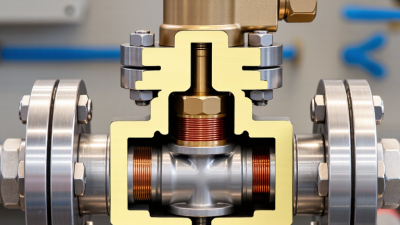
A direct-acting solenoid valve uses an electromagnetic coil to move its internal plunger directly. When the coil receives power, magnetic force lifts or shifts the plunger. This opens or closes the flow passage without relying on system pressure. It can operate at zero pressure, which makes it useful for small water, air, gas, and fluid-control systems.

The valve usually contains a coil, plunger, spring, seal, and machined body. A normally closed model opens when energized and closes when power stops. A normally open model behaves in the opposite way.

In practical testing, you may hear a sharp click as the plunger moves. That sound is not proof of correct flow, however. I still check voltage, leakage, seal condition, and actual flow after installation.

Performance and Selection Considerations

Direct-acting designs respond quickly and remain relatively compact. Their weakness is limited capacity. Larger flow openings require more magnetic force, which can increase heat, power consumption, and valve size.

Selecting a valve only by pipe diameter is a common mistake. Fluid type, pressure range, temperature, response time, seal material, and duty cycle also matter. A small valve may look suitable on a workbench but perform poorly in continuous service. That detail is easy to overlook.


How to Evaluate Direct-Acting Solenoid Valve Manufacturers

Top Direct Acting Solenoid Valve Manufacturers: How to Evaluate Them

Evaluating direct-acting solenoid valve manufacturers requires more than comparing prices. Check pressure ratings, response time, coil temperature, sealing materials, and cycle-life data. Fortune Business Insights estimated the global solenoid valve market at USD 5.84 billion in 2023. Its 2024 report projects continued growth through 2032. Market growth matters, but it does not prove manufacturing quality. Ask for traceable test records, material certificates, and inspection procedures.

A reliable manufacturer should explain performance under real conditions. Request samples tested with your actual fluid, temperature, voltage, and pipe size. During evaluation, inspect the valve body for clean machining and consistent threads. Measure opening response with a timer, not just a brochure claim. Confirm whether the stated cycle life comes from independent testing or internal laboratory work. Small details matter.

Do not ignore electrical protection. IEC 60529 enclosure ratings and relevant coil insulation classifications should match the installation environment. ISO 9001 certification can indicate controlled processes, but it cannot replace product testing. Review warranty terms, spare-coil availability, and documented failure analysis. Ask difficult questions. Some supplier data looks precise but lacks test conditions. I have seen selection errors caused by confusing maximum pressure with operating pressure. That mistake is avoidable. Test the details.

Top Direct-Acting Solenoid Valve Manufacturers? How to Evaluate Them

This illustrative evaluation model assigns practical weighting to the factors that matter most when comparing direct-acting solenoid valve manufacturers. Confirm pressure range, flow capacity, response time, materials, temperature limits, service life, certifications, and technical support against the application requirements. The chart is a selection framework, not a ranking of individual companies.

Leading Manufacturers and Their Product Strengths

Direct acting solenoid valve manufacturers compete through response speed, durability, and application knowledge. In field selection, engineers often prefer compact valves for low-flow systems. These valves can operate without pressure assistance. That matters in dosing equipment, laboratory instruments, and small pneumatic circuits.

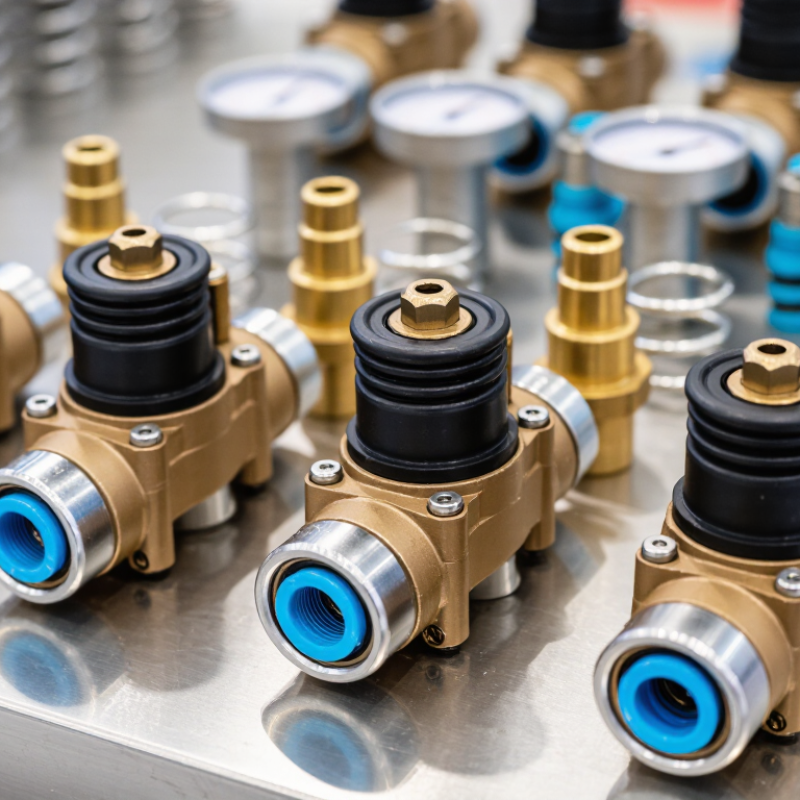
Leading manufacturers usually show strength in different areas. Some focus on stainless steel bodies for humid or corrosive environments. Others develop low-power coils for battery-operated equipment. Strong manufacturers also provide clear pressure ranges, temperature limits, seal materials, and electrical specifications. Reliable production includes coil testing, leakage checks, and repeated switching trials. However, attractive specifications do not always guarantee field performance. Installation conditions can expose weaknesses that brochures miss.

Tips: Confirm the medium, port size, operating pressure, voltage, and cycle frequency before purchasing. Ask for test records and material details. Check whether replacement coils and seals remain available. A valve may look suitable on paper but fail when heat, vibration, or contaminated media are present. Keep a small sample under real operating conditions before approving large-scale use. That step feels slow, yet it can prevent expensive redesigns. Manufacturers with responsive technical support usually add practical value, especially when the application is unusual. Even experienced teams can overlook wiring limits or insufficient filtration.

Key Industry Applications and Valve Selection Factors

Direct-acting solenoid valves remain practical where immediate shutoff matters. In water-treatment skids, dosing equipment, compressed-air lines, and laboratory instruments, they move a plunger directly. No pilot pressure is required. This supports operation at zero differential pressure, although flow capacity is usually lower. Grand View Research estimated the global solenoid valve market at approximately USD 4.5 billion in 2023, with growth continuing through 2030. That expansion reflects automation demand, not universal preference for one valve design.

Selection starts with the orifice, pressure range, media, temperature, and coil voltage. Check viscosity and contamination. A valve rated for clean water may fail with particles, oils, or aggressive cleaning fluids. Stainless steel bodies suit demanding environments, while engineered polymers can reduce weight and cost. IP protection and insulation class matter near washdown areas. MarketsandMarkets has forecast steady growth in industrial valve demand as process automation expands, but forecasts cannot replace site testing. That distinction matters.

In practice, engineers should compare response time, duty cycle, power consumption, leakage rate, and maintenance access. Confirm continuous coil operation. Heat becomes a quiet failure source. A recurring field mistake is focusing on pressure while ignoring voltage fluctuations and installation orientation. A pilot-assisted valve may provide higher flow, but direct acting designs often suit low-pressure, intermittent control. Verify every assumption against the actual medium and operating cycle.

Top Direct Acting Solenoid Valve Manufacturers? – Key Industry Applications and Valve Selection Factors
Application or Selection Area Typical Fluid or Service Common Valve Configuration Representative Operating Range Key Selection Factors Why Direct Acting Is Used
Compressed-air control Filtered and dried compressed air 2/2 or 3/2, normally closed or normally open Small orifice sizes; approximately 0–10 bar, depending on design Flow coefficient, pressure range, response time, coil voltage, duty cycle Can operate at zero differential pressure and is suitable for compact pneumatic circuits
Water dispensing and dosing Clean water, chilled water, or process water 2/2 normally closed Typically low-to-moderate pressure; temperature often up to approximately 80°C for general-purpose models Body material, seal compatibility, potable-water approval where required, flow rate Provides fast on/off control for measured liquid delivery
Refrigeration and HVAC Refrigerants, condensate, air, or water 2/2, normally closed or normally open Temperature and pressure must match the selected refrigerant and circuit Refrigerant compatibility, maximum working pressure, low-temperature sealing, electrical enclosure Compact construction supports small control lines and auxiliary circuits
Laboratory and analytical equipment Air, inert gases, water, and compatible laboratory liquids 2/2 or multi-port miniature valve arrangements Low flow rates, low internal volume, and frequent cycling Dead volume, leakage rate, chemical resistance, repeatability, response time Direct actuation enables precise switching in small fluid paths
Medical and diagnostic equipment Air, oxygen-compatible gases, water, and approved process fluids Normally closed 2/2 or 3/2 configurations Low pressure and low flow; application-specific temperature limits Cleanliness, materials, leakage performance, coil temperature, applicable approvals Fast response and dependable shutoff are useful in compact fluid-handling systems
Fuel and burner systems Fuel gas, air, or approved liquid fuels Normally closed safety shutoff valve Pressure, temperature, and certification depend on the fuel and combustion system Fail-safe behavior, leakage class, material compatibility, approvals, manual reset requirements A normally closed design can shut off flow when electrical power is removed
Industrial lubrication and lubrication skids Lubricating oils and compatible hydraulic fluids 2/2 normally closed Pressure and viscosity vary widely; confirm the valve's allowable viscosity range Viscosity, seal material, pressure rating, port size, heat generation Operates independently of a pilot pressure differential in small metering lines
Water treatment and chemical dosing Water, diluted chemicals, and cleaning solutions 2/2 or 3/2, selected according to flow path Low-to-moderate flow; pressure and temperature are chemical-specific Chemical compatibility, corrosion resistance, seal life, ingress protection Suitable for small dosing lines where a pilot-operated valve may not actuate reliably
Vacuum and gas handling Air, nitrogen, vacuum service, or other compatible gases 2/2 normally closed or normally open Vacuum range and leak rate depend on seat design and construction Vacuum compatibility, internal leakage, outgassing, port size, response time Direct sealing action can provide reliable switching without pilot passages
General valve selection checklist Any approved liquid or gas within the valve specification 2/2 for on/off isolation; 3/2 for switching or venting Use the manufacturer's stated maximum pressure, temperature, flow, and duty cycle Media, pressure, temperature, flow coefficient, orifice, port thread, voltage, enclosure, cycle life Best suited to compact, low-flow, rapid switching applications and zero-differential-pressure service
Technical note: Operating ranges shown are representative industry-use ranges rather than universal ratings. Final valve selection must be verified against the actual fluid, pressure, temperature, flow rate, electrical supply, installation environment, required approvals, and the individual product specification.

How to Compare Quality, Compliance, and After-Sales Support

Choosing top direct acting solenoid valve manufacturers requires more than comparing prices or catalog photos. Quality appears in practical details: clean machining, consistent coil performance, smooth plunger movement, and seals matched to the working fluid. Ask for pressure-cycle test records, material certificates, dimensional reports, and traceability for each production batch. A valve that performs well during a short demonstration may still fail after thousands of cycles.

Compliance and Support Compliance should match your market, application, and installation environment. Check relevant electrical, pressure, material, and environmental documentation before placing an order. Certificates should identify the tested model, revision, and issuing organization. Avoid vague claims such as “international standard” without supporting evidence. After-sales support matters just as much. Reliable manufacturers provide clear installation instructions, spare-part information, response times, and technical troubleshooting. Ask how they handle leakage reports, coil overheating, and incorrect sizing. Their answer often reveals more than a sales presentation.

Tips: Request a sample and test it under real conditions, including cold starts and repeated switching. Compare response time, noise, temperature rise, and leakage. Keep written records. It is easy to trust a polished datasheet, but field conditions are rarely polished. No checklist is perfect. Recheck assumptions about fluid cleanliness, voltage stability, and maintenance access. A manufacturer that accepts technical questions, admits limitations, and improves documentation may be more dependable than one offering the lowest initial quote.